
Chinamaxxing: What It Is, What Sells, and How to Keep It in Stock
Chinamaxxing is the trend of adopting everyday Chinese habits — hot water, indoor slippers, baduanjin — and for a seller it is a demand signal, not a meme. The videos cost nothing to watch. The objects in them do not: a thermal bottle, a pair of house shoes, a herbal tea sachet, a gua sha stone. Someone who copies a routine for three weeks usually ends up searching for the things that make the routine possible. That is the moment a hashtag turns into a purchase order, and it is also where most trend coverage stops.
This guide picks up there: what the word means, which four baskets sell, and what must be true — a signed sample, the right label, a workable reorder rhythm — before a habit becomes inventory. For a shop or marketplace storefront, the question is not how big the trend is, but whether the second batch ships as cleanly as the first.
What the word means, and what it does not
"Maxxing" is gaming slang for optimising a build. Attach it to "China" and you get the label Western Gen Z creators use for adopting Chinese daily habits: hot water, slippers at the door, baduanjin, foot soaking, boiled apple water, red-date tea. China.org.cn lists the tags that travel with it — #Chinamaxxing, #VeryChinese, #ChineseWellness, #BecomingChinese — and dates the wave to early 2026 on TikTok and Instagram. Xinhuanet's August explainer describes the same shift from scattered clips to a broader phenomenon, citing a July 2026 Pew survey of 36 countries in which favourability toward China (46%) passed that of the U.S. (36%).
It is not a statement about nationality. It is not a demand forecast either.
One Chinese inbound-tourism account, writing for tour operators in October, put it plainly: 4 billion cumulative tag views measure seeing; a viewer who actually starts doing the routine has moved to staying; the question "where do I buy that?" comes later. That is a useful correction before anyone commits to stock. Views sit at the top of a funnel, not on a P&L.
Why this one shows up on a purchase order
Two things changed at once: travel got easier, and the shopping became visible. China Daily reports the 240-hour (10-day) visa-free transit policy and the "digital refugees" who moved to RedNote in early 2025 for unscripted daily life. China Business News reports 22.914 million inbound foreign visits in H1 2026, up 20.4%, reaching nearly 500 cities — breakfast queues and night markets, not just the Great Wall.
The second half is practical. A cross-border e-commerce account called the empty-suitcase trip "a ready-written selection report": goods a traveller will fly in, choose by hand and film carry proof of demand. It notes roughly 8,000 foreign buyers a day at Shenzhen's Huaqiangbei market and a jump in the share of AI products there from 41% to 61% in a year. An account from a Shenzhen park housing 811 cross-border firms is blunter: traffic is not a brand, and the four thresholds are product development, supply-chain coordination, overseas compliance and team capability.
Most trend pieces stop at the first threshold.
Four baskets, four different rulebooks
| Basket | Typical items | What breaks first | Ask the supplier for |
|---|---|---|---|
| Warm-water and small appliances | Thermal bottles, kettles, heated scrapers | Electrical safety, plug and voltage variants | Declaration of Conformity, marking, importer details |
| Home and textile | Indoor slippers, shoe racks, mamian skirts | Sizing, fibre content, origin marking | Label artwork, size chart, country of origin |
| Wellness and topical | Herbal tea sachets, shampoo bars, gua sha stones, fragrance | Ingredient claims and kit labelling | Ingredient list, outer-carton artwork, warnings |
| Collectibles and gifts | Designer toys, blind boxes, gift sets | Children's product rules, small parts | Test report, and a CPC where the item is for under-12s |
The trap is treating all four as general merchandise.
A kettle is an electrical product. A shampoo bar may be a cosmetic. A blind-box figure for children carries a different burden. GOV.UK's UKCA/CE guidance assigns the manufacturer the conformity assessment, technical documentation and marking. An importer who sells under their own name, or modifies a product in a way that affects compliance, takes on the manufacturer's obligations. That last sentence catches first-time buyers of a "customised" wellness set.
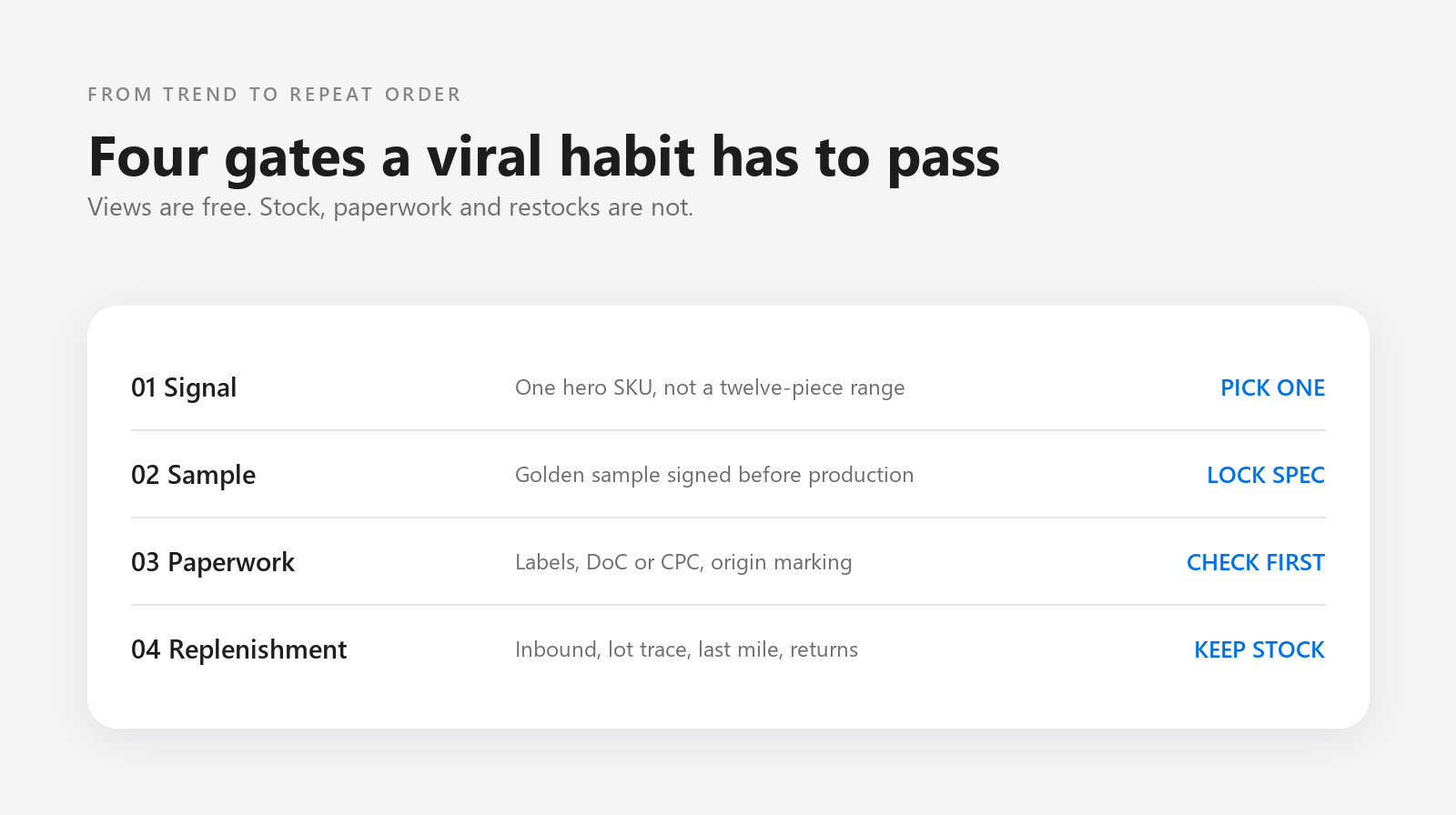
Views are the cheapest part of the chain. The sample, the paperwork and the reorder rhythm decide whether there is a second order.
Start with one SKU, not a twelve-piece range
One independent-site operator made the counter-intuitive case in March: winners here are "extremely restrained", dead-set on one emotionally legible product, because a shop with too many SKUs is a shop nobody can describe. A $19 herbal shampoo bar is easier to remember than a twelve-item wellness line. A second seller-side report suggests bundling the product with the ritual — a kettle with red-date and ginger sachets and a brewing card — because the buyer wants the habit, not the hardware. A tourism account says the same from the other side: list the three to five objects a visitor needs to keep the routine at home. That is your first range. A single product sourcing brief makes the second SKU easier to justify than the tenth.
The supply-side term is small-batch rapid replenishment — a short first run followed by quick repeats when the content performs. Ask the factory for its MOQ at three volume points, not one, and get the re-run lead time in writing. At a few hundred units, packing in-house is often cheaper than a kitting line; the economics separate only in four figures, and the middle band is where first-timers get stuck. There is no universal cut-off — it moves with carton size, labour and component count, so treat any quoted threshold as specific to that line, not yours.
The sample is the specification
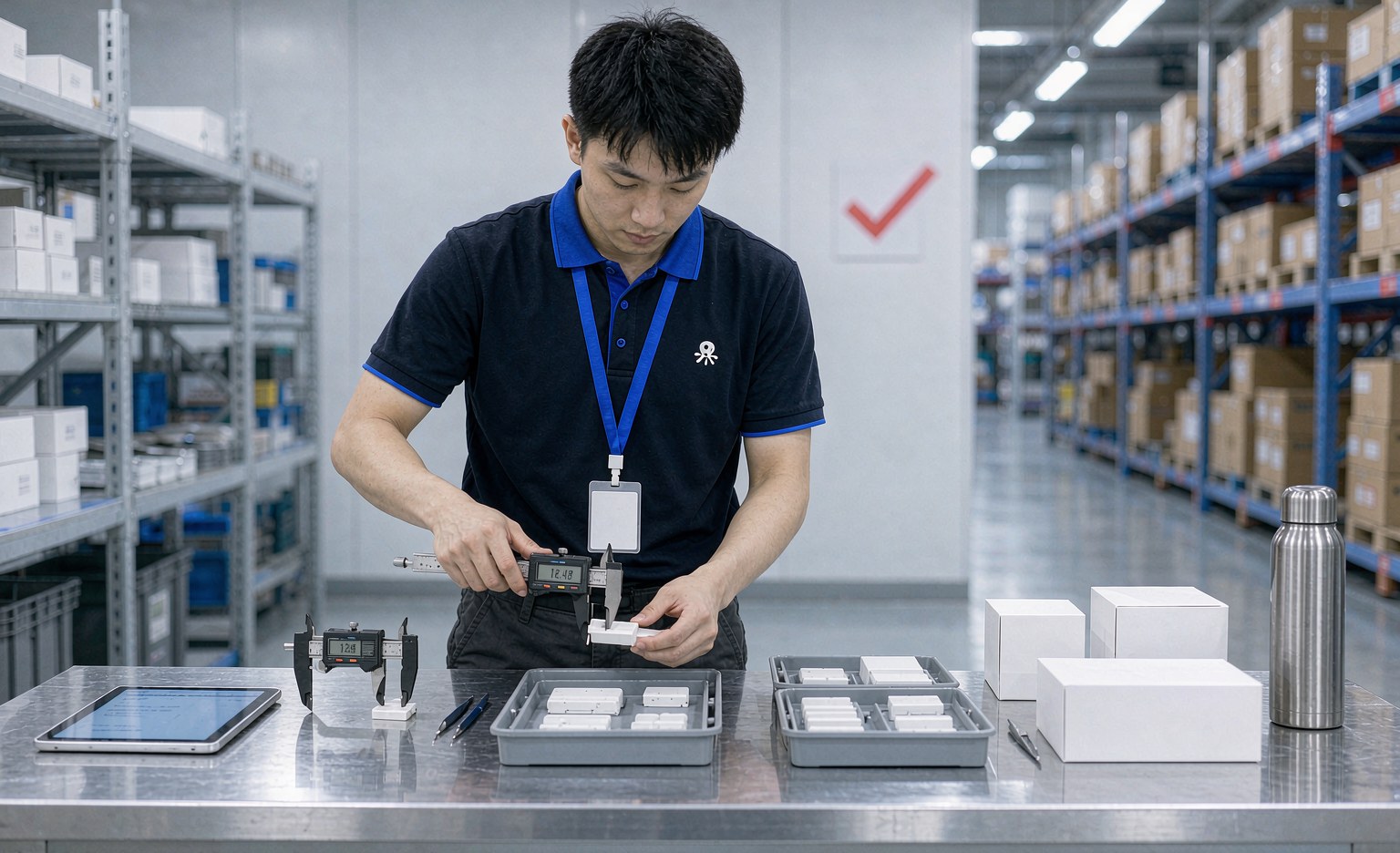
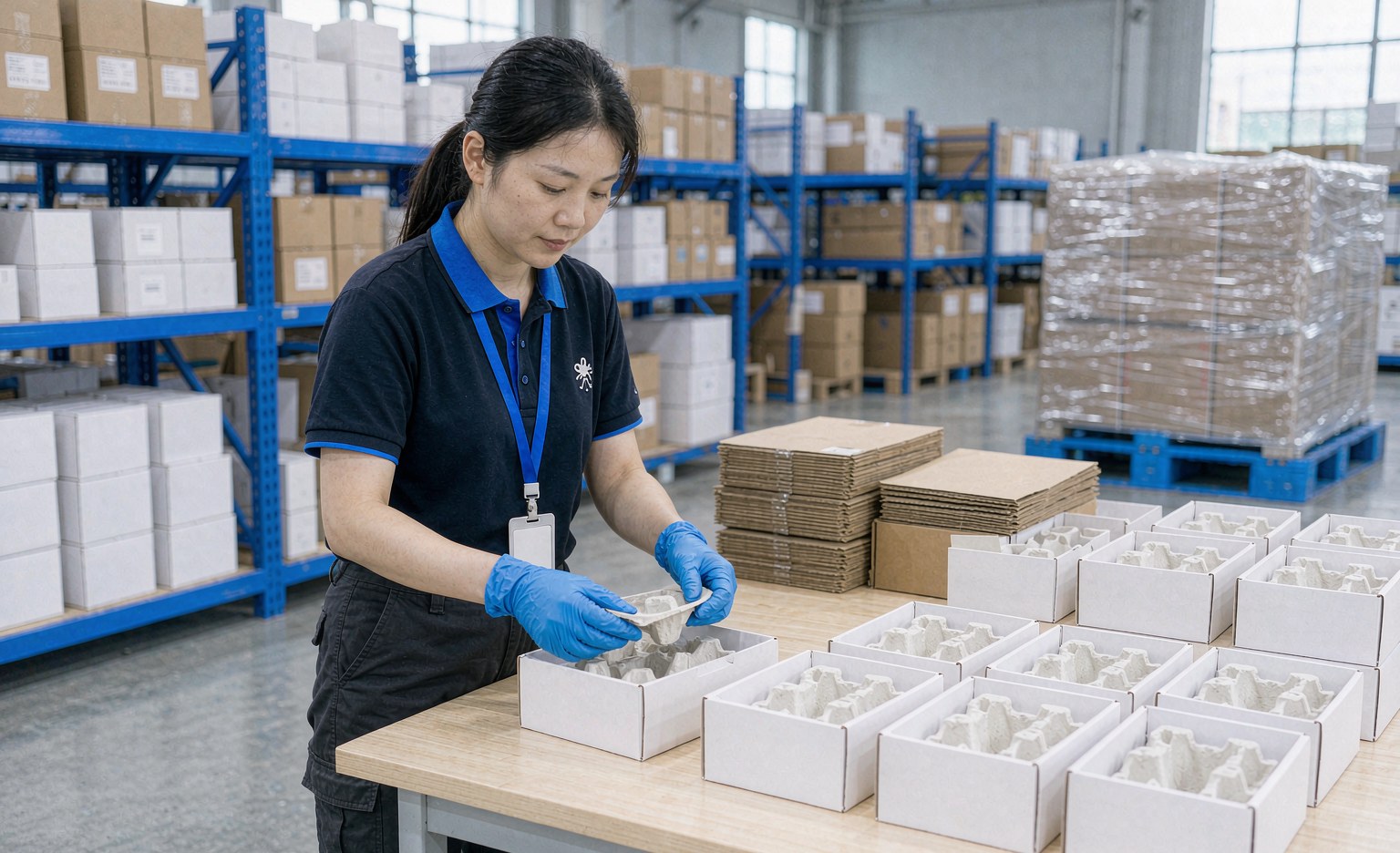
These are illustrative warehouse scenes, not photographs of a specific facility.
A third-party inspection company's November field notes describe a five-step factory loop: confirm the drawing, sealed sample and technical agreement; sign off the first article and photograph it as the "golden sample"; draw by specification, colour and batch, taking from separate pallets in one container; record measurements on site; then issue a bilingual report the same day, with a rectification note, re-inspection, signed release and container-loading supervision that logs container and truck numbers. Their basis is GB/T 2828.1, general inspection level II, normal single sampling, with defects graded critical, major and minor. They also state that a report written after the fact is not accepted.
That last detail is the one worth stealing.
"First batch good, later batches loose" is the classic failure mode for trend goods: the factory changes a liner, a colour masterbatch or a mould, and the difference shows up only after the cartons land. Early signals are mundane — a shade shift in the approval photo, a carton weight that no longer matches the packing list, a test report a week late. A golden sample, an agreed AQL level (the acceptance quality limit that sets how many defects a batch may carry) and a pre-shipment inspection tied to the batch number cost far less than a returns wave. Checking spec labels and shipping marks against the contract, and recording the minimum measurement rather than the average, belong to the same discipline.
Packaging is where a trend becomes a kit
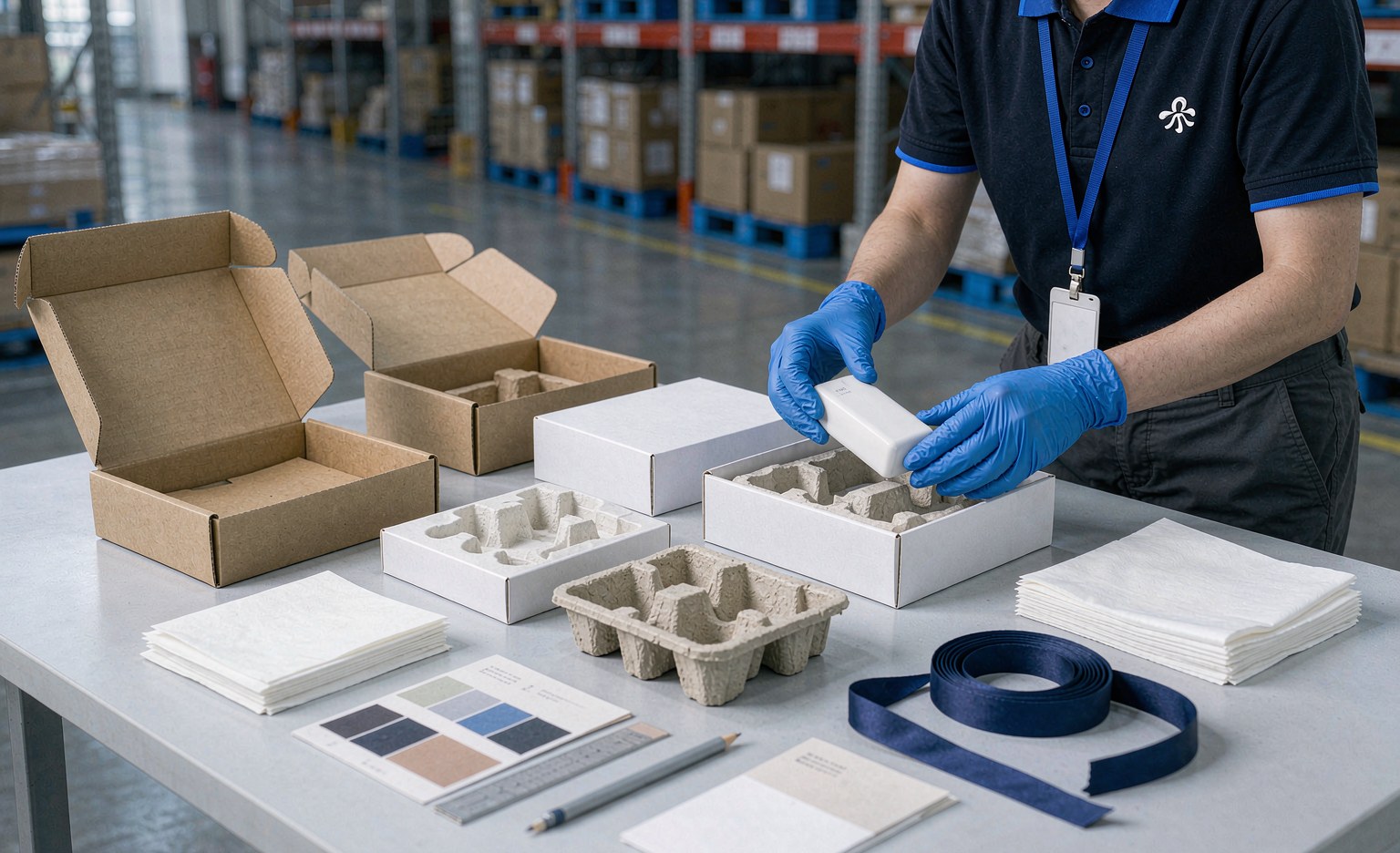
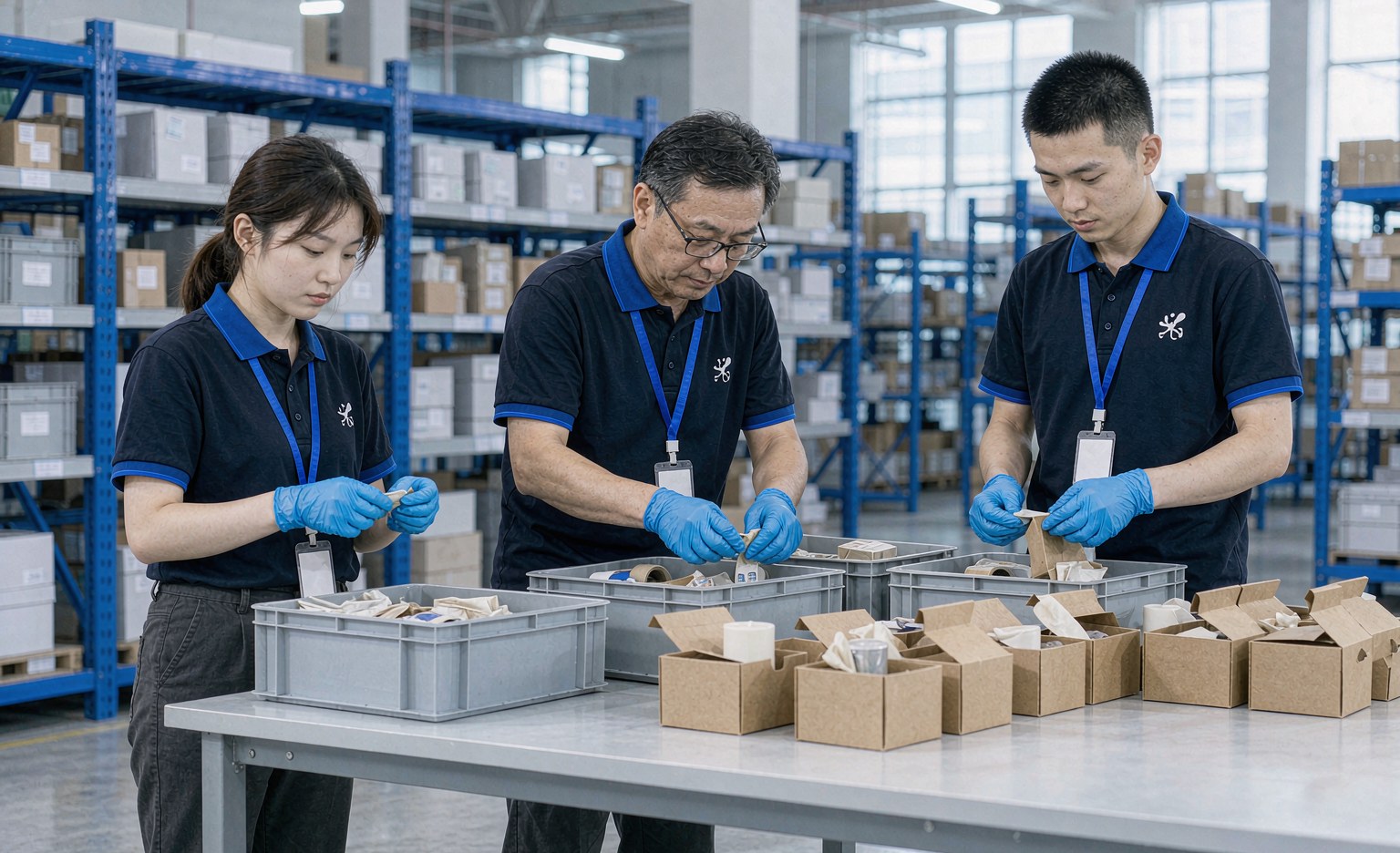
Once a bundle has two or more components, it stops being a pick-and-pack line and becomes a kitting job with a bill of materials. The physical sample settles box structure, insert fit, ribbon and finishing; the BOM makes that decision repeatable. FDA's cosmetics labeling guide has a specific provision for multiunit and multicomponent packages: ingredients must be declared on the outside retail container, and on inner units too if those are customarily sold separately. A "Chinese wellness set" with a balm, a tea and a scraper has a label for an outer carton, not just a box.
| Field | What it fixes |
|---|---|
| Kit SKU and component SKUs | One scan at receiving, no mystery bundles |
| Supplier and lot per component | Trace a complaint back to one production run |
| Quantity per kit | Short packs caught before the line starts |
| Label, insert and language version | The artwork that actually ships |
| Regulatory document reference | DoC, CPC or ingredient list, per component |
| Golden sample reference | What "acceptable" looks like |
| Pack-out sequence and orientation | Fewer crushed inserts |
| Units per carton and carton weight | Inbound reconciliation at the door |
These are the fields a warehouse needs before it can receive a kit cleanly. Miss one and the first inbound count becomes an argument instead of a scan.
The documents buyers ask for before the first order
GOV.UK lists what a Declaration of Conformity may contain — manufacturer name and address, model or type, the legislation and designated standards, signatory and date — and requires the manufacturer or importer to keep technical documentation and show their name, trade name and postal address on the product. FDA's cosmetics guide requires identity, net quantity, name and place of business, and ingredients in descending order of predominance, in English; the Tariff Act adds the English country of origin. Required warnings must be bold and at least 1/16 inch high.
For children's products, the U.S. CPSC requires third-party testing by a CPSC-accepted laboratory and a written Children's Product Certificate with seven elements, including manufacture date and place and the lab's identification. The same page flags that from July 8, 2026, importers of most regulated consumer products must electronically file compliance certificates with CBP through a Partner Government Agency message set. If you are importing a designer toy as a gift, ask whether it is positioned for children 12 or under before agreeing a price — the answer changes the whole document set.
We cannot say which regime applies without seeing the product and its destination market. Get the applicable standard named in writing, and make the label artwork a signed deliverable rather than a late attachment.
From the first carton to the repeat order

The account that called the empty suitcase a selection report ends with a caveat: a person can only carry so much, and turning one unboxing gasp into a second purchase takes after-sales, local stock and a reorder path. Inbound cartons are reconciled against the packing list before anything is booked to stock; lots stay traceable; pack-out rules and the shipping lane are confirmed before dispatch; returns rejoin the same record rather than a side spreadsheet; and the last mile — the final carrier leg to the doorstep — is what the customer judges. Our China Haul guide covers the traveller side, including allowances, batteries and consolidation. This one starts where goods become commercial stock.
Subscriptions and refill packs are where a lifestyle trend becomes a business or quietly dies. A high-frequency consumable is not a one-off sale: memberships, points and refills move a trial purchase into a habit. A bottle is a one-time buy. The tea sachets are the repeat.
A pre-order checklist you can copy
- One hero SKU named, with a three-to-five-item companion list written down.
- Golden sample signed, photographed and dated; every later batch compared against it.
- MOQ and re-run lead time confirmed in writing at three volume points.
- AQL level, defect classification and pre-shipment inspection tied to the batch number.
- Kit BOM complete, including the label, insert and language version that actually ships.
- Applicable regime named by the supplier: DoC / UKCA / CE, FDA ingredient labelling, or a CPC with an accepted lab.
- English country of origin and importer name and address on the artwork.
- Inbound pack-out rules, carton quantity and the returns path agreed before dispatch.
When to keep it a test
Not every viral habit deserves a supply chain. If the product needs a long-lead certification, or the MOQ ties up cash needed for the next content cycle, keep it a small test and sell through first. If it is a consumable with a natural refill, or a kit built from components you already hold, the case is stronger. Marketplaces draw that line differently; get the answer for your own SKU in writing.
The cheapest insurance is boring: lock the golden sample and the label artwork before you discuss volume. A short conversation about sourcing, inspection or kitting usually costs less than discovering either one at the receiving dock.
References (Neutral Third-Party Sources)
- China Economic Net / Xinhuanet — Chinamaxxing: What is it and why is it happening? (Aug 9, 2026): the definition of the term, the lifestyle habits named, the #BecomingChinese origin, and the July 2026 Pew 36-country favourability figures. https://en.ce.cn/main/latest/202608/t20260809_3136790.shtml
- China.org.cn — 'Chinamaxxing': Why Western youth are fascinated by 'Cool China' (Apr 15, 2026): the gaming-slang origin of "-maxxing", the associated hashtags, and the early-2025 move of U.S. users to Xiaohongshu / RedNote. https://www.china.org.cn/2026-04/15/content_118438135.shtml
- China Daily — Western Gen Z is embracing Eastern rhythms (Aug 20, 2026): the 240-hour visa-free transit policy, the RedNote migration, and the everyday habits and consumer brands named. https://mobile.chinadaily.com.cn/cn/html5/2026-08/20/content_009_6a8606a3ed50be540e736564.htm
- China Business News (国际商报) — "Chinamaxxing": 当"中国日常"成为世界向往 (Aug 19, 2026): 4 billion cumulative tag views, 22.914 million inbound foreign visits in H1 2026 (+20.4%), and visitors reaching nearly 500 cities. https://epa.comnews.cn/pc/content/202608/19/content_30751.html
- GOV.UK — Placing UKCA or CE marked products on the market in Great Britain (updated Aug 21, 2026): manufacturer and importer responsibilities, Declaration of Conformity contents, technical documentation, and the name and postal address required on the product. https://www.gov.uk/guidance/placing-ukca-or-ce-marked-products-on-the-market-in-great-britain
- U.S. Food and Drug Administration — Cosmetics Labeling Guide: identity, net quantity, name and place of business, ingredients in descending order, English-language and country-of-origin requirements, warning type size, and the multiunit / multicomponent package rule. https://www.fda.gov/cosmetics/cosmetics-labeling-regulations/cosmetics-labeling-guide
- U.S. Consumer Product Safety Commission — Children's Product Certificate: third-party testing by a CPSC-accepted laboratory, the seven required CPC elements, and the July 8, 2026 electronic filing requirement with CBP. https://www.cpsc.gov/Business--Manufacturing/Testing-Certification/Childrens-Product-Certificate